
Racing Changes Things
David Millar on racing exploding assumptions

Bike brands lean on all sorts of catchphrases and shorthand to help define themselves to customers. Some are a “legacy” brand, or a “premium” brand, or a “disruptor”. What about Factor?
In “What is Racing?”, the piece I wrote last week, I touched on something Rob said to me when I first joined Factor, which was that we were an engineering-led company. I admitted that it took me a while to understand what he meant by that, and said I’d come back to it separately, so I suppose this is me doing exactly that.

The problem I had with the phrase initially was that “engineering-led” sounds like one of those things a bike company is supposed to say about itself. We’re a company that makes high-performance bikes, so of course we’re going to talk about engineering, just as we’re going to talk about innovation and performance, and inevitably there will be photographs of wind tunnels and CFD images and extremely clever people staring at computer screens. I’ve spent enough of my life around the bike industry to have developed a fairly healthy scepticism towards some of the language we all use, even when it happens to be true.
Engineering: behind the designs and decisions
What I’ve come to understand since joining Factor is that when Rob talks about being engineering-led, he isn’t really talking about the tools we use to make bicycles. He’s talking about how we decide what to make in the first place, and perhaps more importantly, what happens when the information coming back to us suggests that something we thought was right isn’t quite as right as we thought it was.

Which brings me back to racing, because racing has a wonderful, and occasionally deeply inconvenient, habit of doing exactly that.
I spent a chunk of my adult life as a professional bike racer, so I know this relationship from the other side. As riders, we were very good at knowing when something wasn’t right, although we weren’t necessarily very good at explaining why. You know that you’re fighting the bike somewhere you don’t think you should be, or that you can follow a wheel through one section but lose it somewhere else, or that something which felt perfectly good in training suddenly becomes a problem three or four hours into a race when you’re tired and your ability to make good decisions has started to disappear. You know what you’re feeling because it’s happening underneath you, but that doesn’t mean you understand what is causing it.
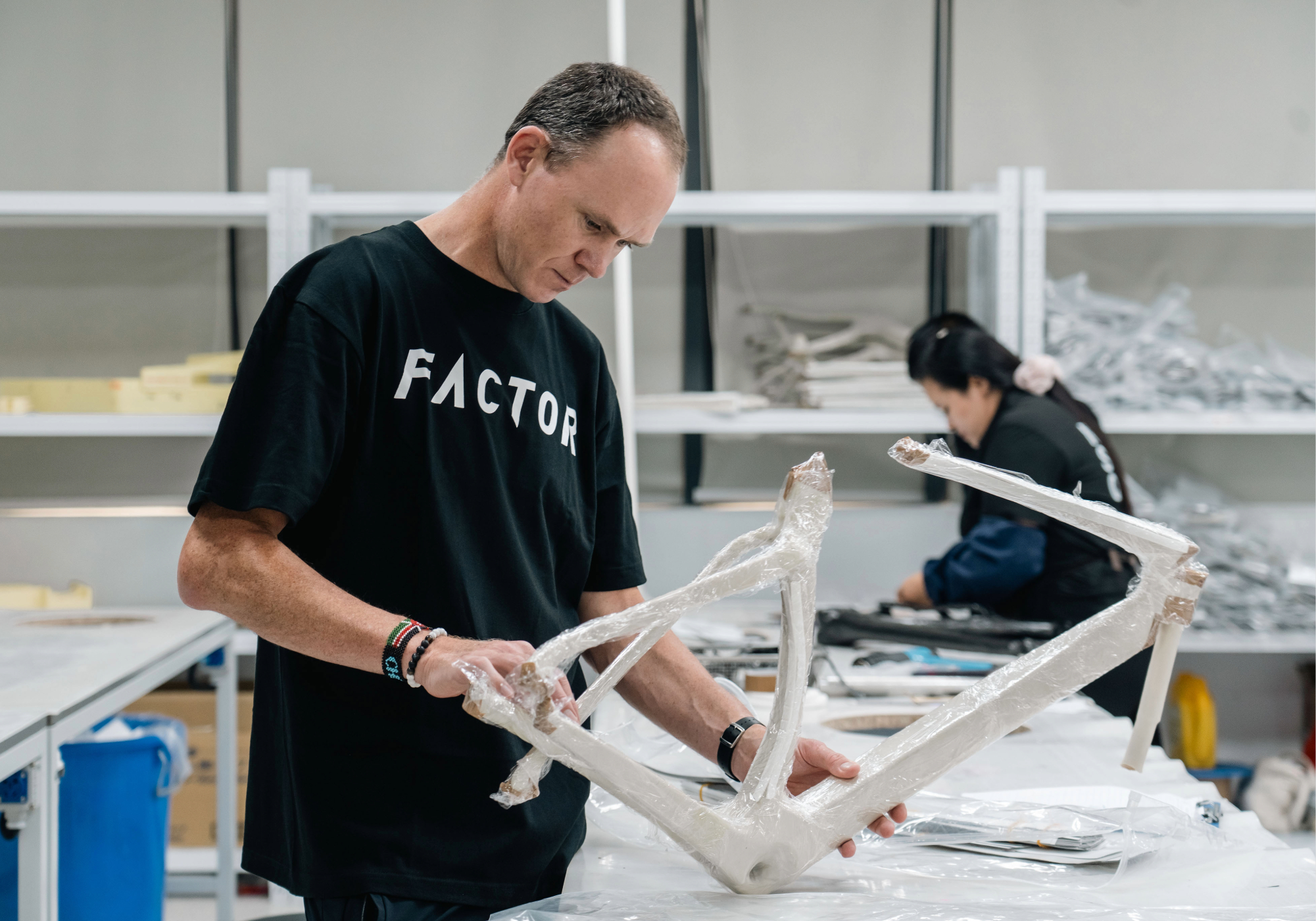
I’m probably more aware of that now because I sit somewhere in the middle of the conversation. We have riders whose job is to push the equipment into situations where its limitations become apparent, and engineers whose job is not simply to do what those riders ask them to do, but to work out what the rider is actually telling them.
That distinction is important, because rider feedback isn’t a design brief. If a rider says they want something changed, we don’t simply change it. What they’re giving us is information, and then the engineers have to interrogate that information: is the problem real, can we measure it, what’s causing it, and if we solve it here, what are we compromising somewhere else?
Bike design and how long is a piece of string
Bikes are particularly annoying in this respect because everything seems to affect everything else. Change a tyre, and you’ve potentially changed the aerodynamics, the handling, the rolling resistance and the way the rider interacts with the ground. Change the rider’s position, and you’ve changed more than their position. Change the geometry to solve one problem, and you may well have created another. Weight, stiffness, aerodynamics, tyres, wheels, drivetrain, geometry and the rider themselves can all be discussed separately, but the moment somebody gets on the bike and races it, they become one interconnected thing. We tend to think of the bike as the platform, but performance only really exists once the rider is added and the whole thing becomes a system.

The process therefore isn’t particularly linear. You identify a problem, try to understand it, model a solution, make something, test it, give it to riders, race it, learn something you weren’t necessarily expecting to learn, and then go back around again. Sometimes the riders confirm exactly what the engineers expected, which I imagine is rather satisfying. Sometimes they don’t, which is probably more useful.

There’s another part of this that I find interesting, and it’s something I touched on in the previous piece when I talked about Factor not really having the rigid product roadmap I expected when I arrived. I had assumed, probably because this is how most industries work, that somewhere there would be a grand plan telling us when each bike would be replaced and what would come next. In reality, it is considerably more organic, because the starting point tends to be a performance problem rather than a date on a calendar.
That makes sense when you think about it, because racing itself doesn’t operate according to anybody’s product roadmap. The sport changes continuously, and sometimes remarkably quickly. Courses change, speeds change, equipment changes, tactics change and, perhaps most importantly, what riders believe is possible, changes. Something nobody would have considered racing a few years ago can become completely normal remarkably quickly once somebody proves that it’s faster.
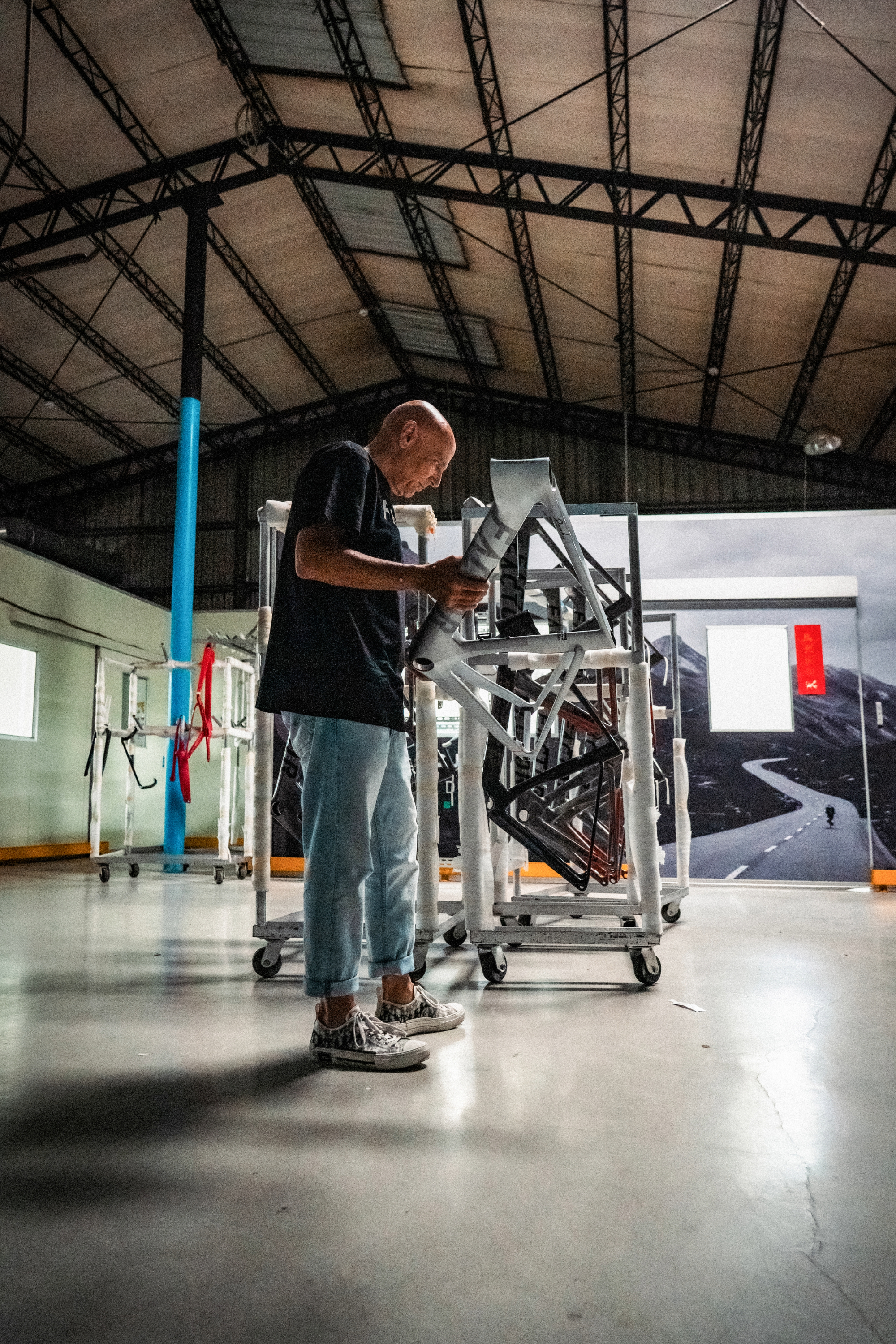
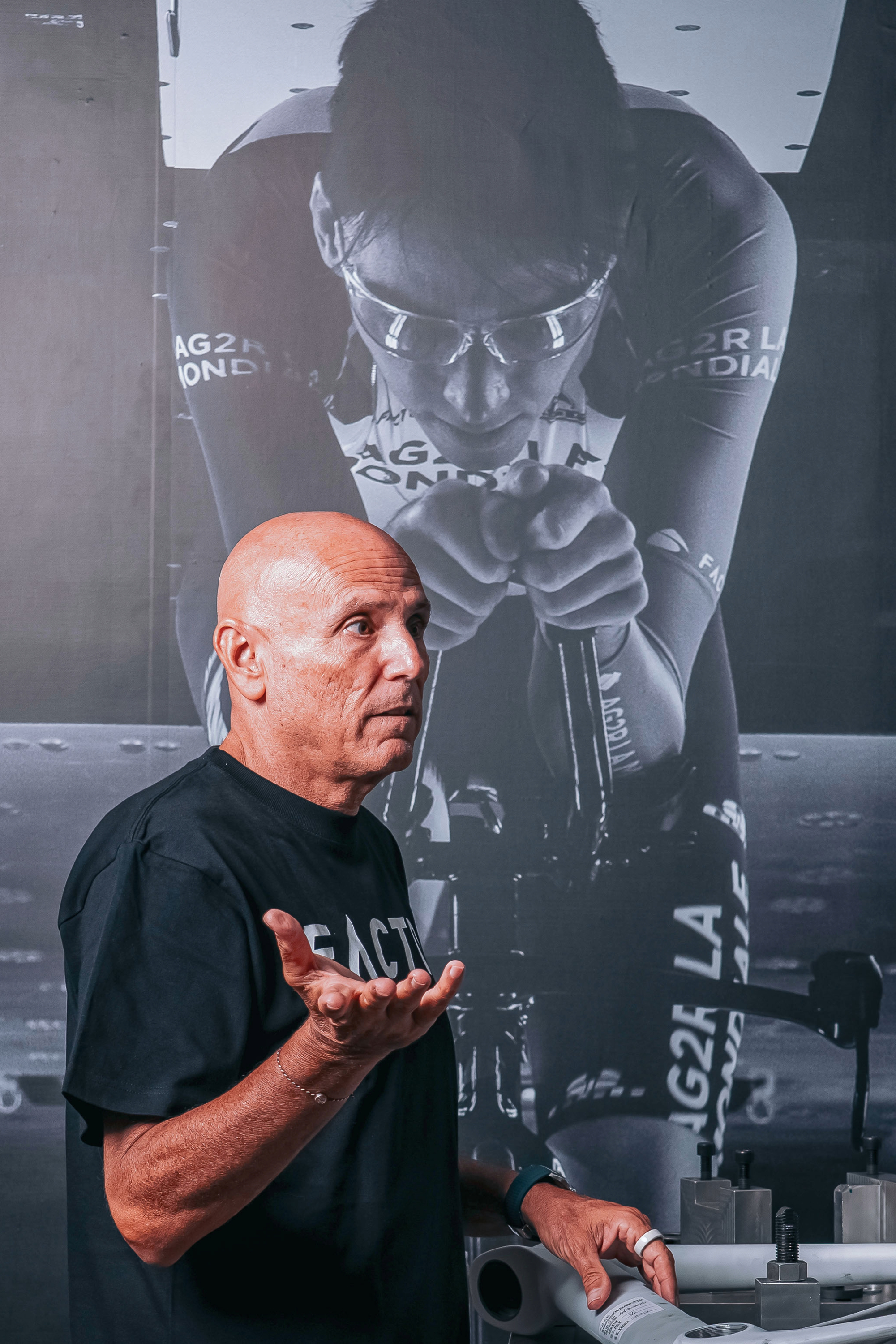
I find this fascinating because we tend to talk about bike development as though there is a fixed destination called “better”, and all we need to do is keep moving towards it: lighter, stiffer, more aerodynamic, repeat. Yet the definition of better is constantly being moved around by the sport itself. A bike can still be every bit as good as it was when it was created, while the race it was designed for has changed around it.
Racing exposing assumptions
This, for me, is where racing becomes most valuable. It doesn’t simply prove whether something works, it exposes assumptions. You can spend an enormous amount of time modelling and testing something and arrive at a solution you believe in completely, then put it underneath an elite rider in a race and discover that the sport has presented a situation you hadn’t properly accounted for. That isn’t the development process failing, it’s the development process working.
It also means you can’t become too sentimental about your own work. If the information coming back from racing tells you that the problem has moved, you have to be prepared to move with it, even if doing so is considerably more difficult than refining what you already have, and even if what you already have is something you’re very proud of.
Which brings me back, once again, to why we race. Obviously, we want to win, and obviously professional racing puts Factor bikes in front of people, but increasingly I think those are only part of its value to us. We race because racing puts everything under pressure: the bicycle, the rider and, importantly, the assumptions that led us to make the bike the way we did.

Sometimes what comes back confirms that we were right. Sometimes it leads to a relatively small change. Occasionally, though, the sport changes enough that the most interesting thing isn’t how you improve the answer you already have, but whether you’ve reached the point where you need to ask the question again.
And sometimes that means being prepared to start again.
Follow us for the latest updates from all our athletes.
Factor Instagram / Facebook / YouTube / Factor Racing Instagram / David Millar Instagram


© 2026 Factor Bikes. All rights reserved / Privacy Policy |Terms