
Two roadies and a gravel adventure
David Millar rates the ELARA and SARANA at Gravel Burn
 David Millar, Chief Brand Officer

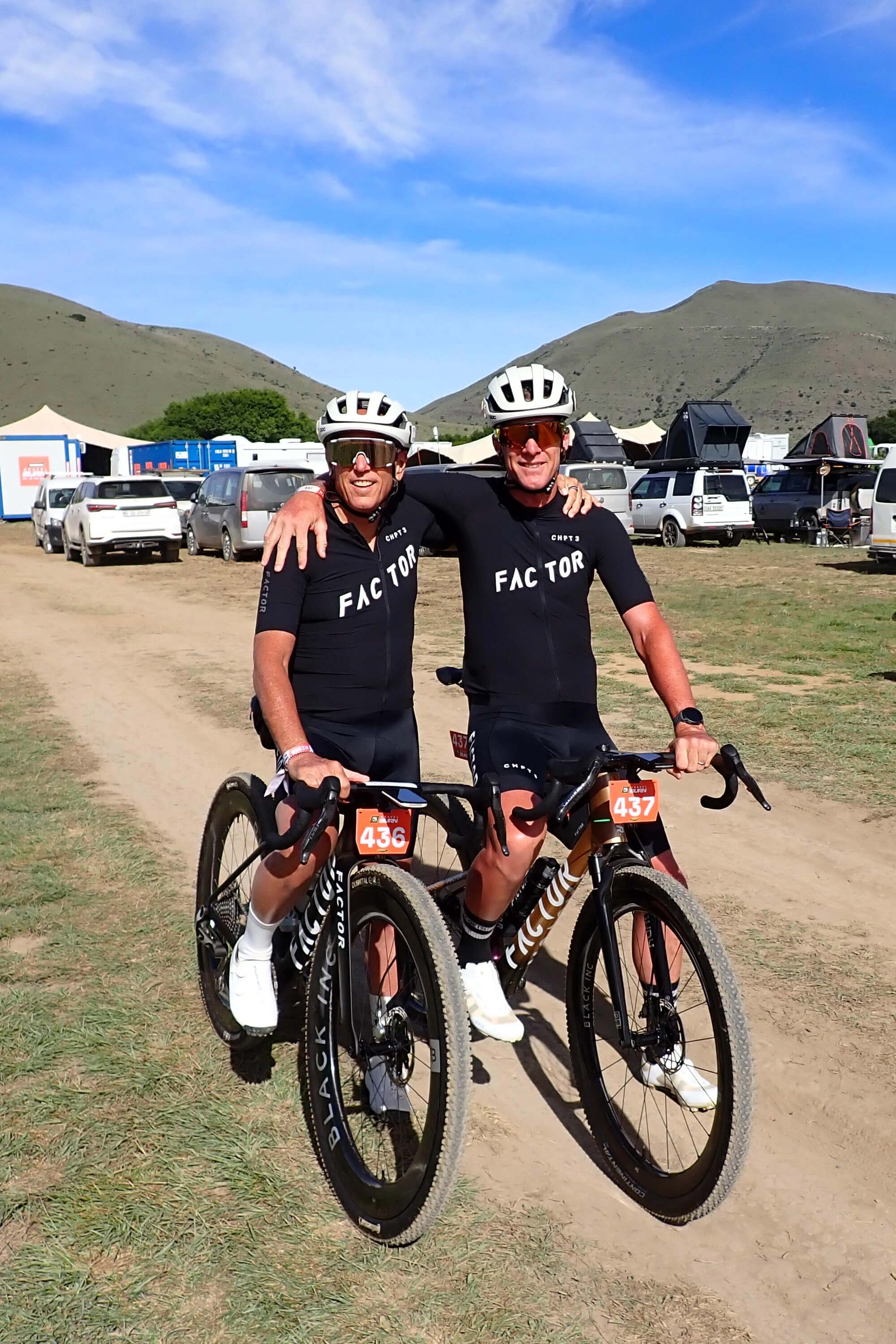
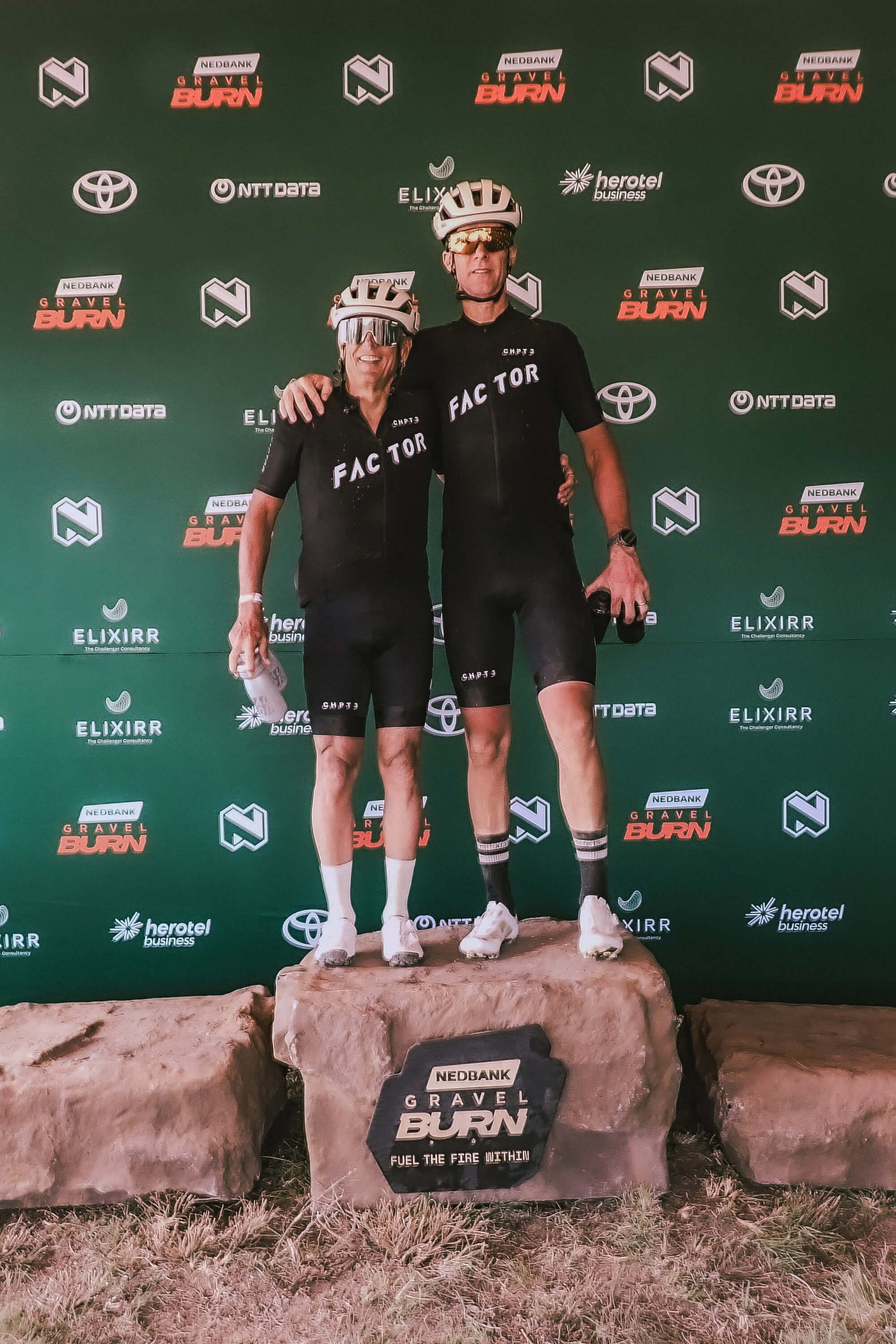
Rob Gitelis and I have developed something of an annual obligation to go somewhere exotic and in difficult conditions to ride our bikes, during which time we usually end up questioning our life choices. In 2024, it was Migration Gravel Race in Kenya, in 2025 Unbound in Kansas, and this year we found ourselves in South Africa for Gravel Burn. Seven days of racing through the Eastern Cape, from the vast open expanses of the Karoo to the considerably less welcoming terrain approaching the coast.
As ever, we'd come with the intention of enjoying ourselves. And, as ever, there were moments when we seemed destined to undermine that intention. This year, however, we had an added dimension to our adventure. We'd chosen two very different bikes.
I was riding the Factor SARANA, our endurance gravel bike, and chose to up the ante even more by equipping it with front suspension. Rob had opted for the ELARA, our aerodynamic gravel race bike, with his Black Inc SIXTY FOUR wheels. Two bikes developed around different approaches to gravel racing, ridden by two people who, as it turns out, have equally different approaches to riding.
I was convinced I'd made the sensible choice.

The art of being overbiked
My thinking was simple. Having experienced the carnage of Migration Gravel Race, I wasn't taking any chances. I wanted confidence, control and the ability to ride for seven consecutive days without feeling as though I'd been boxing instead of riding my bike.
The SARANA is engineered for exactly that. It's a bike designed for racing that lasts days rather than hours, with a little more stability at lower speeds and a rear triangle that acts like a leaf spring, providing additional shock absorption at the saddle. I'd doubled down on that philosophy by fitting front suspension, thinking a little extra weight would pay dividends as the week went on and the fatigue accumulated.

Rob, meanwhile, had gone full race mode with the ELARA. It's designed to be agile at speed and exceptionally aerodynamic, with the sort of responsiveness you'd expect from a bike developed to go very fast indeed. Once we arrived a few days before the start, I took considerable pleasure in people telling me I'd made the right choice. Everybody seemed convinced that the terrain would favour my suspension-equipped SARANA.

Unfortunately, after Stage 1, Rob was absolutely fine. Not that I was sorry that Rob and his ELARA were well able to handle the course; I just kinda felt a little, well, overly cautious in my choice. We'd ridden 90 kilometres through beautiful, remote countryside on gravel roads that were remarkably reminiscent of Girona. Hardly the apocalyptic terrain I'd been preparing for.
So much for my smugness.
The thing about gravel racing is that the term covers an extraordinarily wide range of surfaces. One moment you're on a road that might as well be paved, the next you're wondering whether you've accidentally entered a mountain bike race. And Gravel Burn, as we were about to discover, was going to give us a bit of everything.
Speed is relative
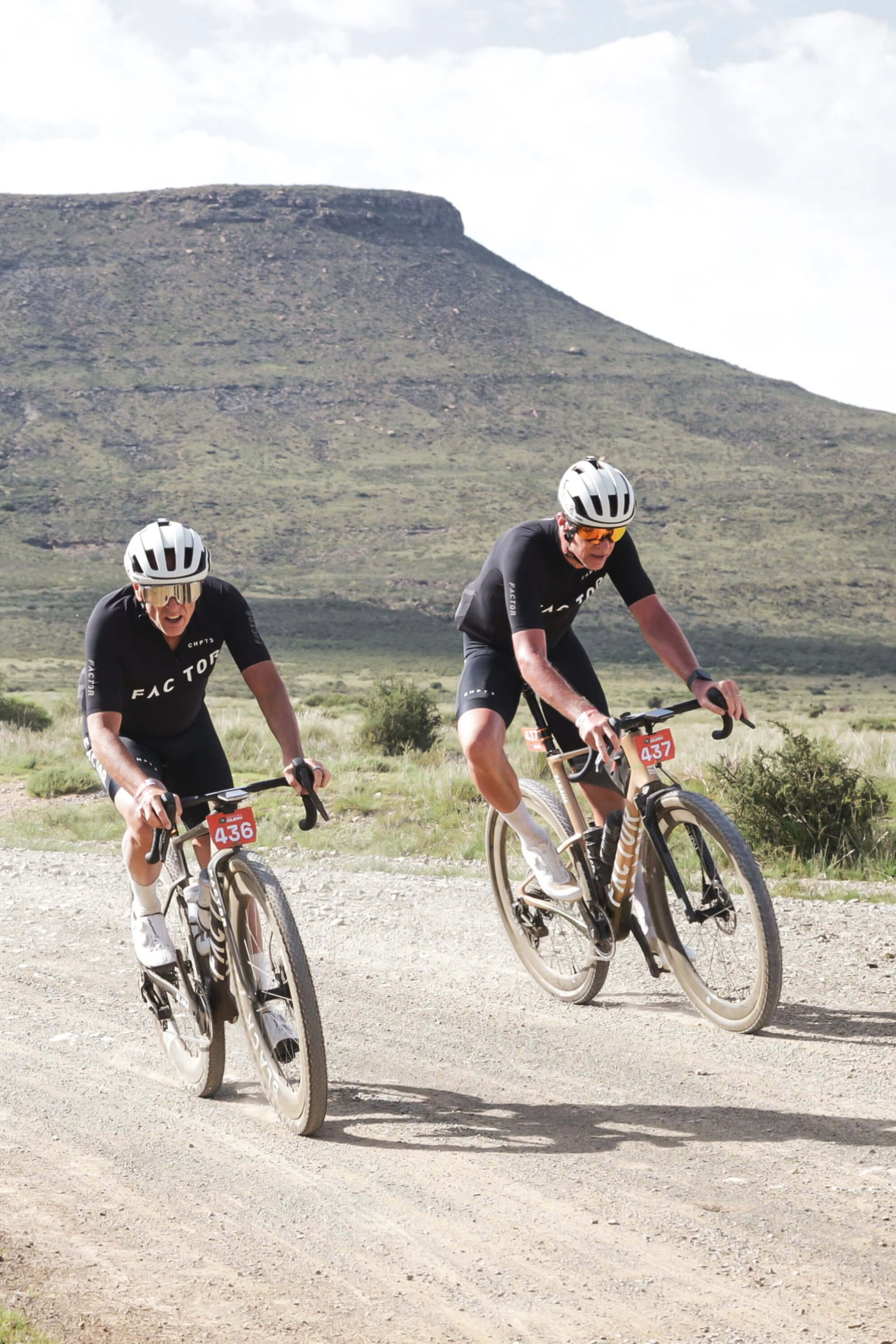
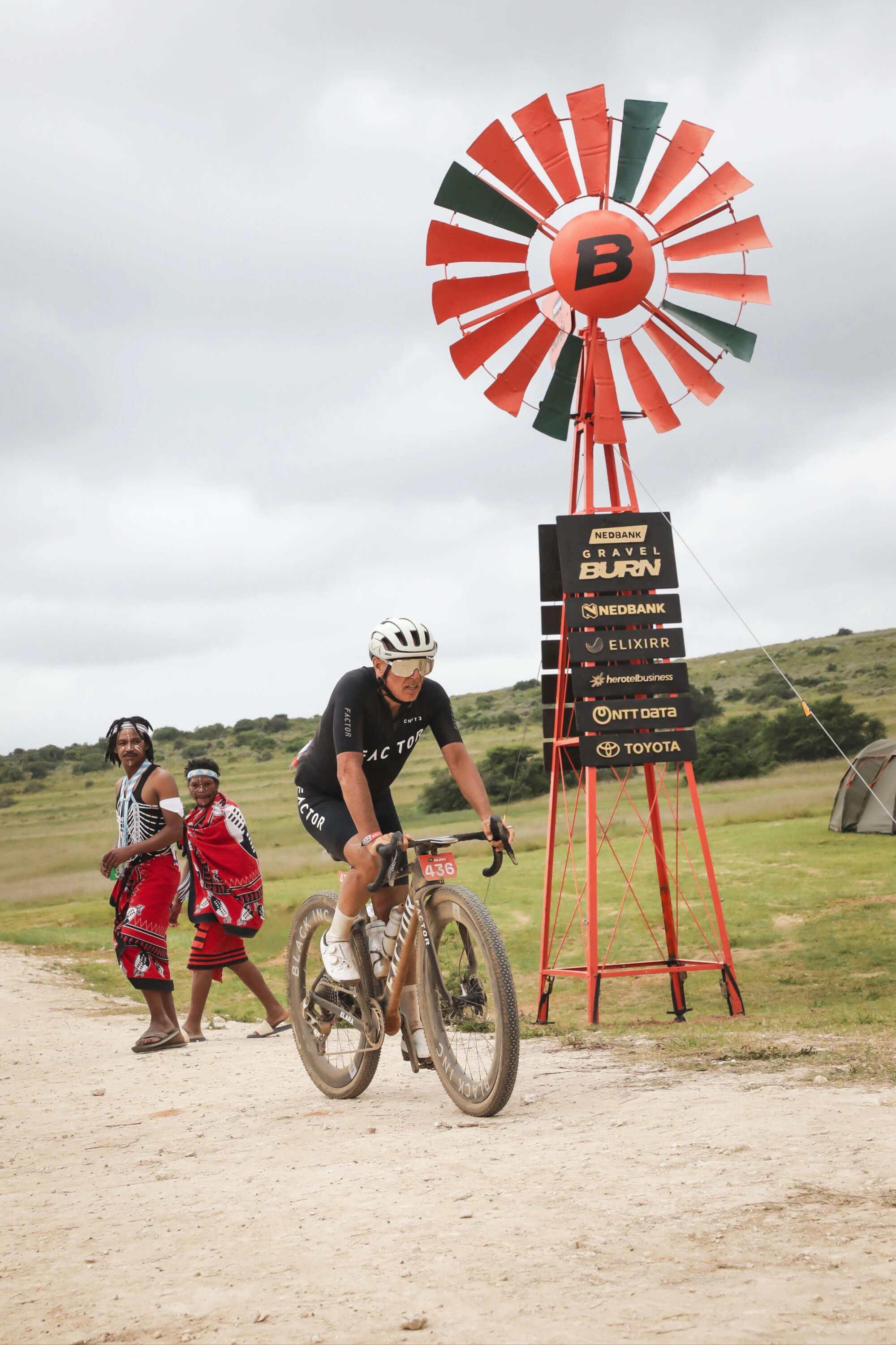
One of the reasons Rob and I enjoy these events is that we're no longer particularly interested in racing them. At least that's what we tell ourselves. We've both spent enough of our lives in professional cycling to know what it feels like to be properly competitive. These days, the appeal of gravel is that you can choose your own level of suffering. If a group is going too fast, you simply let it go. There's no great psychological trauma associated with being dropped.
Of course, this philosophy only works if you actually stick to it.
On Stage 3, we had 137 kilometres ahead of us, including a substantial amount of paved road. This was exciting news. We decided it might be an opportunity to claw back some dignity.
We started at the back and gradually worked our way through the field. I took responsibility for the flat sections, Rob contributed on the climbs, and for a while we felt like we knew what we were doing.

The ELARA was very much in its element on those fast, open roads. It's built for carrying speed, and with Rob's Black Inc SIXTY FOUR wheels, he had a machine optimised for precisely that sort of riding. Then we returned to the gravel. The final climb was an absolute horror show. Washboard surfaces, increasingly steep gradients and a final six kilometres averaging around ten percent, with passages considerably steeper.
It was carnage. Riders were stopping, some were walking, and I was reduced to moving at a speed that barely qualified as cycling. I eventually spent three hours incapacitated in my tent after the finish. I don't think either bike could have saved me from that. There's only so much engineering can do when the engine is fundamentally underprepared. But what was becoming apparent was that neither of us was being held back by our equipment. The bikes were dealing with everything the race threw at them. Our legs were occasionally another matter entirely.
When gravel stops being champagne
By Stage 5, Gravel Burn had started showing its other personality. The first 50 kilometres were glorious. Long, straight, fast gravel roads. The sort of riding that makes you understand why gravel bikes have become so incredibly focused on aerodynamics. We moved through groups, I rode the flats, Rob rode the climbs, and everything was going swimmingly. Then we found ourselves back in Migration Race territory. Double singletrack, bumpy farm roads, technical sections and surfaces that required rather more attention than the champagne gravel we'd become accustomed to.
I was managing pretty well. Rob was less enthusiastic. He explained that his reluctance wasn't necessarily about the bike or his ability. It was about risk. He feels a certain responsibility not to crash and injure himself doing something unnecessary. I understand that completely. I've spent most of my life pushing the limits of what I could get away with on a bike, and I've got the scars to prove it. These days I'm considerably less interested in finding out what happens when things go wrong.

The SARANA was particularly good in these conditions. The combination of its geometry, rear-end compliance and front suspension meant I could let the bike move beneath me without feeling I was constantly fighting it. I could ride the descents with confidence, even while exercising a degree of caution that my younger self would have never considered.
Something else surprised me. I found I could get out of the saddle on loose terrain with remarkable ease. I hadn't expected that, and it gave me another dimension of control while retaining the ability to push it when the surfaces became unpredictable. Perhaps most importantly, I wasn't accumulating the sort of impact fatigue I'd been fearing. After several days of riding, that matters. A lot.
Rob was still getting on perfectly well with the ELARA. He wasn't suddenly wishing he'd brought a different bike, although he did admit that a little more shock absorption would have been welcome. I should point out that he'd also managed to wear through his handlebar tape from gripping it so tightly. There may be a lesson there about equipment versus technique. I chose not to labour the point. Well, not too much.

Two bikes, two riders
What became increasingly interesting over the week was how differently Rob and I rode.
Rob tends to accelerate uphill and ease off downhill. I prefer to keep things moving on the flats, enjoy the descents, and do whatever is necessary to survive the climbs. This makes riding together an interesting exercise in compromise and collaboration.

The SARANA suited my approach beautifully. Its stability and ability to absorb rough surfaces meant I could maintain momentum when things became technical, without feeling I was being punished for it. It was reassuring when I wanted reassurance, yet still responsive when I wanted to push on.
The ELARA suited Rob's preference for a more direct, race-oriented bike. It was fast on the open roads, agile when he needed it to be, and entirely capable of dealing with the rougher sections, even if he occasionally looked as though he'd rather be somewhere else. It allowed him to push it when he felt like it, and ease off when he wanted to make sure he wasn’t one of the riders ending their day in an ambulance.
And that, ultimately, is the distinction between these bikes.
It's not that one is capable of riding terrain the other cannot. Both are extraordinarily capable gravel race bikes. It's about what you want to emphasise and optimise. The ELARA prioritises aerodynamic efficiency, speed and agility. The SARANA prioritises endurance, stability and reducing the physical toll of spending long hours on unpredictable terrain.
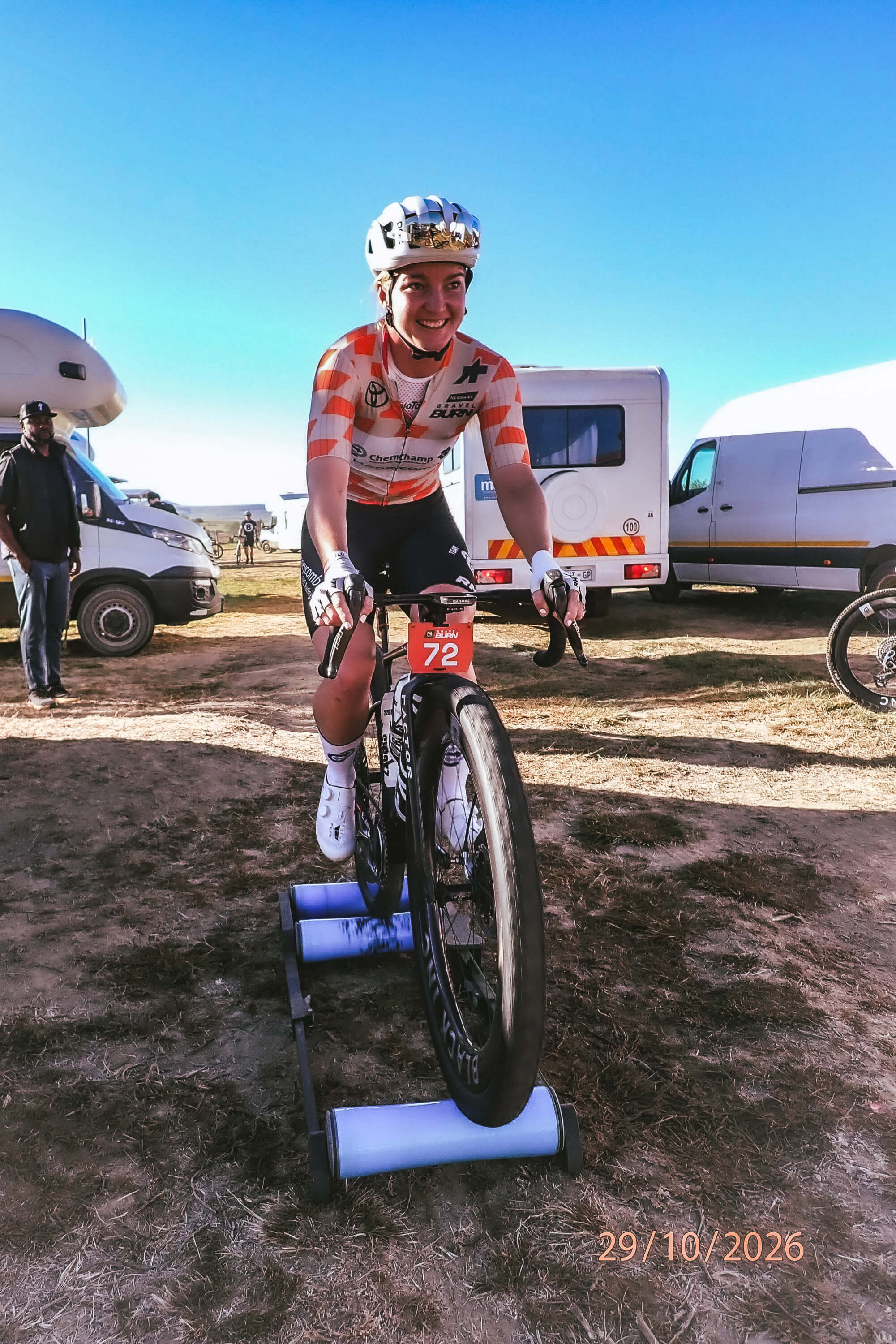
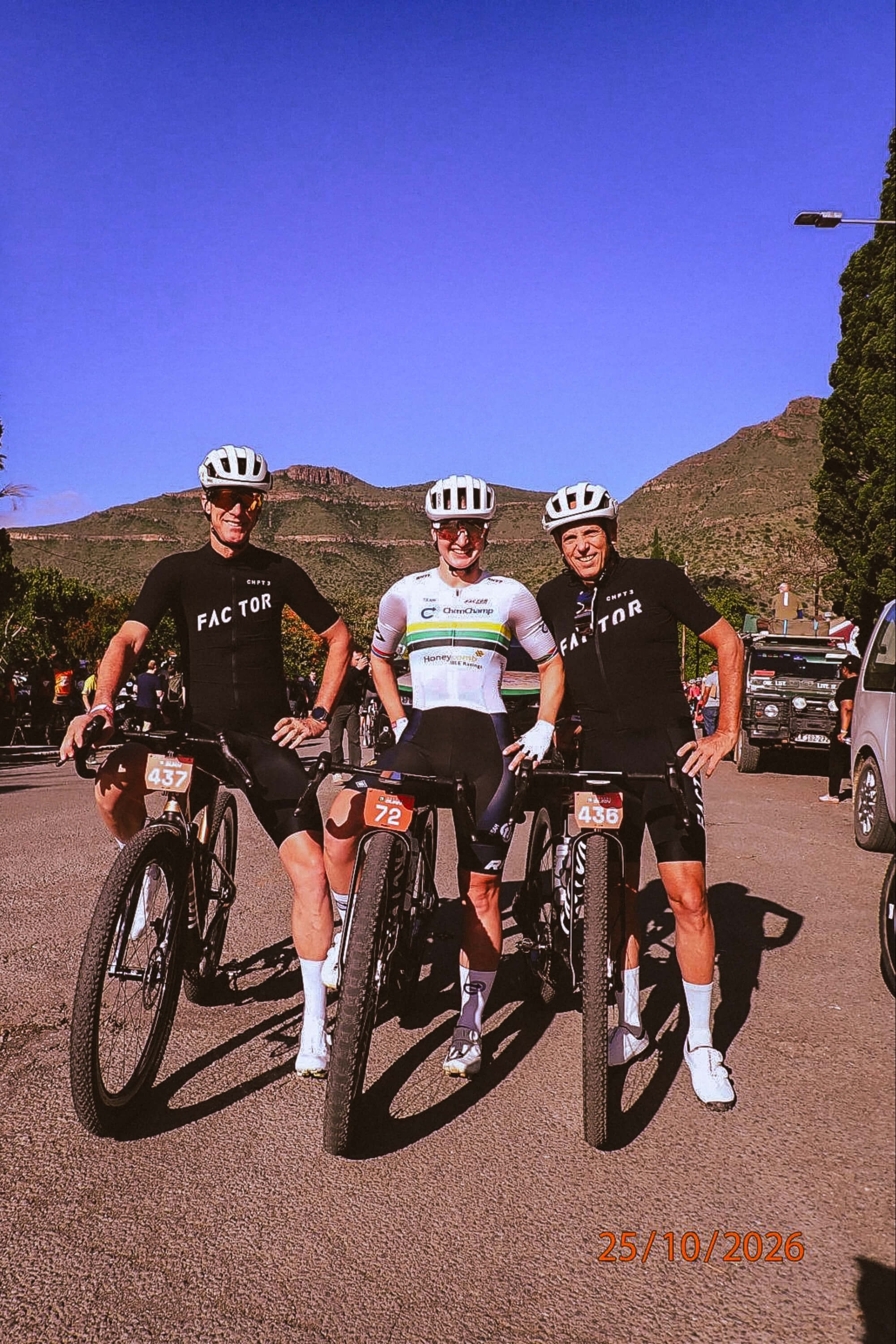
Over seven days, we were getting a very practical demonstration of those different philosophies. There was another useful reference point in the race. Hayley Preen, South African gravel and mountain bike champion and a Factor Racing athlete, was racing an ELARA fitted with Black Inc SIXTY FOUR wheels and 55 mm tyres. Her bike looked like something from Mad Max, and she was absolutely flying.
She won multiple stages and finished second overall while also claiming the Toyota Power Climber title. So while Rob and I were conducting our rather relaxed comparative experiment somewhere towards the back of the field, Hayley was demonstrating what the ELARA could do when ridden by somebody who was actually interested in winning.
Of course, that rather neutralised any argument I might have been developing about the superiority of my bike choice.
No resting on the seventh day
By the final stage, something unexpected happened. I started feeling good. Not just less terrible than I had earlier in the week, but genuinely good. I could push on the pedals, find a rhythm and maintain it. For the first time in a very long time, I felt as though I was properly like a cyclist again.
After the first climb, I went ahead of Rob, initially planning to wait for him at the feed station. But when I arrived, I realised there were only 27 kilometres to the finish. I decided to keep going. I rode as hard as I could, and it was wonderful. I felt in control, able to push myself and enjoy the sensation of going fast without the feeling that I was about to implode.
The SARANA was brilliant. After a week of rough roads, technical sections, washboard climbs and long days in the saddle, I still felt spry and confident enough to let rip. That was perhaps the most convincing endorsement of the bike I could have asked for. I finished the stage having gained 116 places, which earned me the Elixirr Jersey for the biggest improvement in position on the day. It was an unexpected addition to my palmarès.

So, who chose correctly?
I'd spent much of the week wondering whether I could reach a definitive conclusion about whether the SARANA or ELARA was the better choice for Gravel Burn.
The answer, somewhat annoyingly, is that we both chose correctly.
For me, the SARANA was perfect. I wanted a bike that would allow me to ride seven consecutive days over unpredictable terrain, minimise impact fatigue and still be capable of going properly fast when the opportunity presented itself. It delivered exactly that.
Rob's ELARA did everything he asked of it. It was fast, responsive and capable across an extraordinary variety of surfaces. He might have appreciated a little more comfort on the roughest sections, but he never encountered terrain that the bike couldn't handle. And Hayley's performance showed just how far the ELARA can be pushed when racing is the priority. What I took away from the week is that the distinction between these bikes isn't really about capability. It's about preference, riding style and the type of experience you want to optimise.
The ELARA is Race Speed. The SARANA is Race Endurance.
Neither philosophy excludes the other. Both bikes can go fast, both can handle difficult terrain, and both are more capable than most of us will ever need. The difference is where they place the emphasis.
Follow us for the latest updates from all our athletes.
Factor Instagram / Facebook / YouTube / Factor Racing Instagram


© 2026 Factor Bikes. All rights reserved / Privacy Policy |Terms