
Factor’s Bike Guide for Roubaix
Choosing the right equipment for the roughest race

Whenever a new piece of equipment is created, there are always questions about how it can contribute to our professional athletes’ ability to perform at the highest level. This is an ever-evolving science as equipment develops. However, we can rely on a pragmatic approach honed over decades as well as a tremendous depth of accumulated experience residing within the Black Inc and Factor team.

Recently we have had the pleasure to support the up-and-coming Modern Adventure Pro Cycling team, whose principal, George Hincapie, has had an extensive amount of experience racing the cobbles himself, with a palmarès stretching from wins and podiums to agonising equipment failures. With any new team, there are always questions around equipment, which we have been working on together since the team was founded in 2025. However, an unexpected invitation to race Paris-Roubaix has required us to give some deeper thought on equipment selection for that seminal race.
Understand the situation
At Factor, we frequently discuss with our professional athletes the concept of how to select equipment in the context of what their goals and expectations are for a given event. Extensive consideration of the course profile is required to make an intelligent recommendation, as well as the rider’s own riding style and physiology, and finally the illusive “sensations” that only testing a variety of equipment with a variety of riders can give insight into.
Respecting these disparate inputs requires the ability to put aside the spreadsheet and consider both human factors as well as pure data in the decision making process. It's too easy to use a spreadsheet to tell the riders that they should use an aero bike only up until x% road incline, however this ignores several other factors such as the riders’ pedalling styles, rider weight vs equipment weight, amount of time spent inside the bunch vs on the front, etc. Although no two riders are identical, the team trucks often don’t have the capacity to carry equipment for every eventuality. Special consideration to logistical issues is part and parcel of running a professional cycling team that simultaneously competes in multiple race programs.
Equipment to match the goals
With all that in mind, how do you sort through the various demands and constraints to make salient equipment recommendations? The answer is deceptively simple. First, we listen to people, then we apply the deep experience we’ve gained over the years to synthesise a recommendation that, in our opinion, will give our athletes the highest possible likelihood of achieving their goals.
In the case of Modern Adventure Pro Cycling, the goals for their debut Paris-Roubaix are naturally relatively modest. Starting a new team is a huge undertaking, and racing in these conditions in your first year of operation makes this event even more daunting. When the topic of participation in Roubaix first emerged, our main discussion point was to ask, “What is the team’s goal for this race?” Understanding what the goal is inspires the remainder of the decision-making process.
“We’d love to have as many of our riders as possible finish our first Paris-Roubaix; that’s the main goal. If we could get one or two riders in the top 20 in the process, that would be a dream scenario for us.”
– George Hincapie, General Manager, Modern Adventure Pro Cycling
When evaluating these goals, it's always important to understand where you intended to “win your race” or accomplish your goal. If your goal is to win, then of course this is clear, however what about in situations where the goal is simply to finish the race? Where do you “win” with this goal? Or in the case of Roubaix, where can you lose your race? When the goal is ultimately to finish the race, suffering a DNF, or getting into a situation that sees you off the back and out of any relevance at the race, classifies as losing the race.
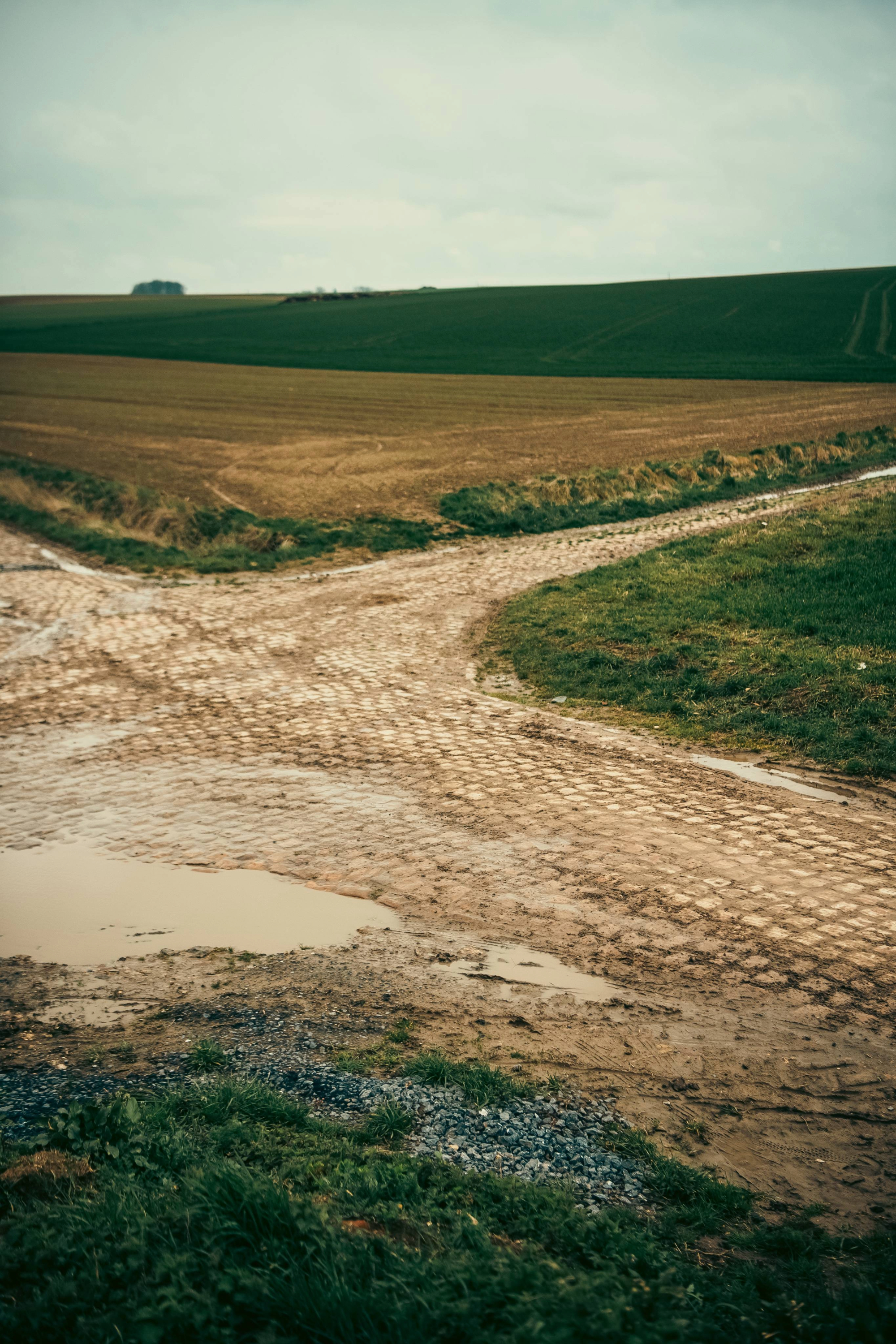
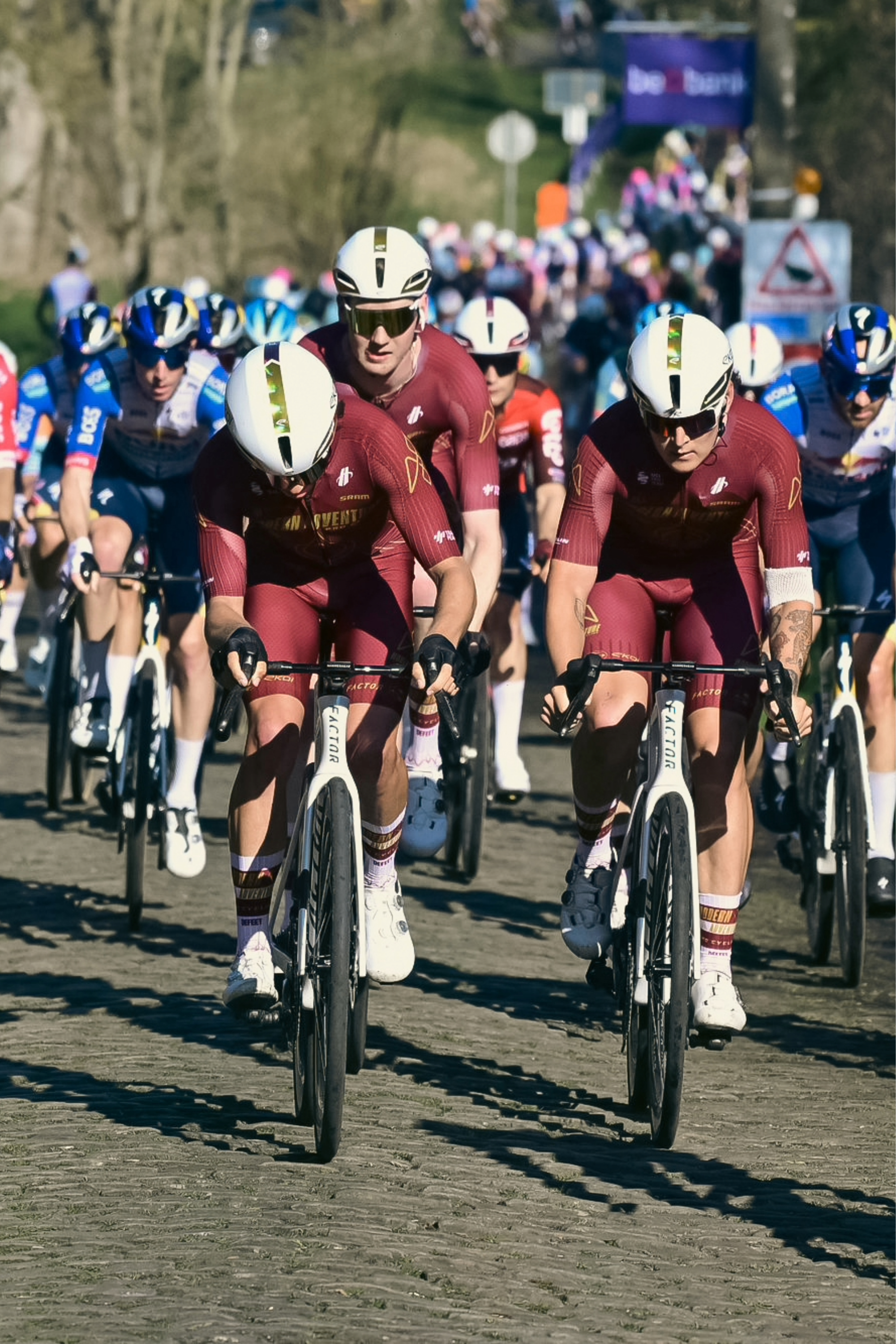
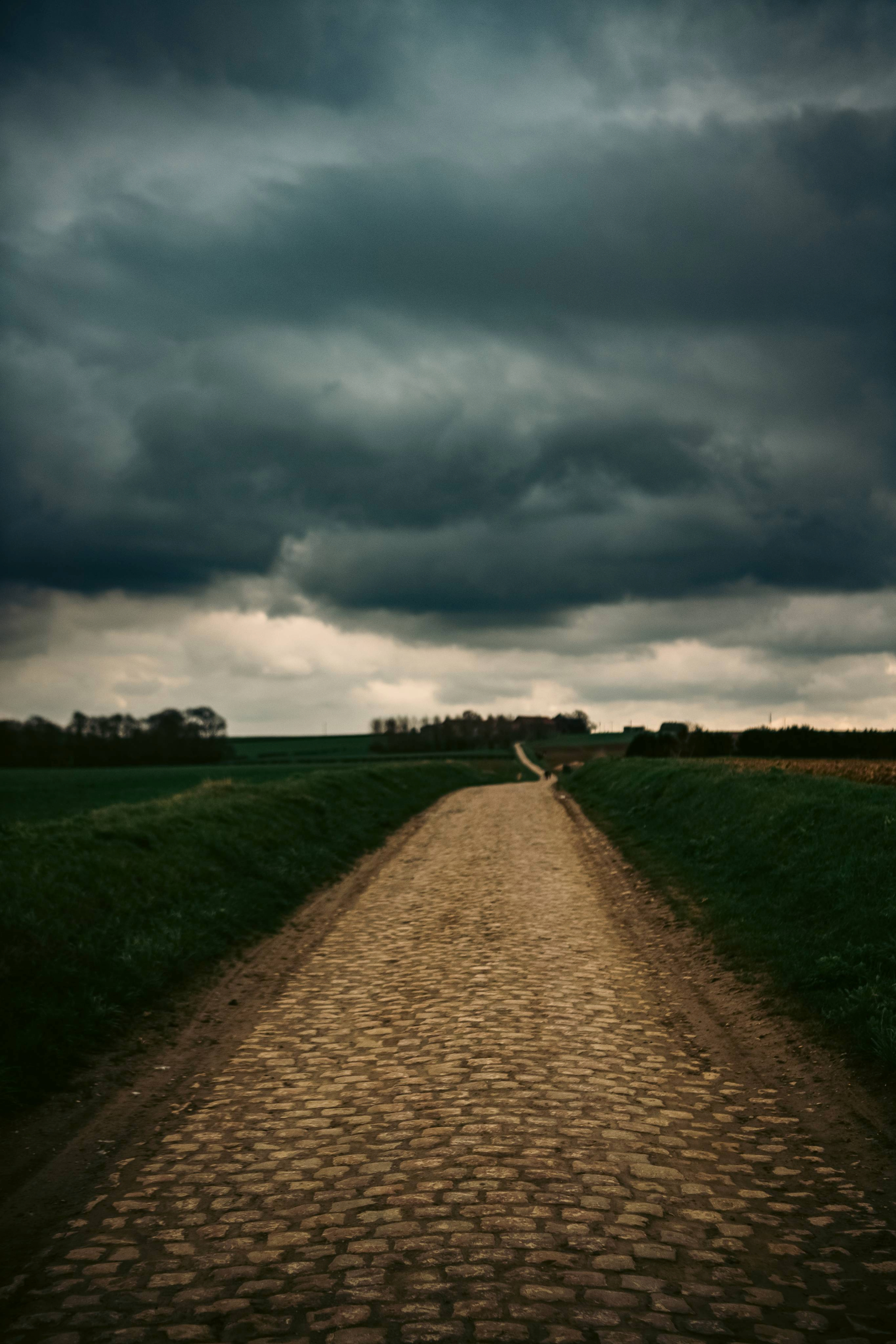
In our world as equipment suppliers, this comes down to a fairly easy set of decision making criteria: What equipment is best suited to survive the chaos of the peloton at Roubaix and deliver the rider to the finish line with body and mind intact?
In light of that, we evaluated the road racing product line available to us at Factor and Black Inc, and ultimately recommended they use the MONZA frameset, with the Black Inc FIFTY EIGHT Wheelset. Our rationale for this decision lies in the concept that while the ~2.5-watt aero penalty moving from the OSTRO VAM to the MONZA doesn’t put the rider into a non-competitive position, a mishap leading to a broken frame 100% will put them out of contention.
Lightweight, responsive, and durable
The MONZA’s general durability when contrasted with the ultra-light, optimised layups of the ONE and the OSTRO VAM give it an innate “toughness.” While the stiffness profiles on the bikes are largely similar, the frame masses and volumes are different. To spare every gram from the super light OSTRO VAM while normalising the stiffness requires a small number of extremely stiff high modulus fibres to be used, whereas on the MONZA a greater quantity of lower modulus, less stiff and more ductile fibres are used. This is the classic trade off among price vs weight vs stiffness, where you can only ever pick 2. When you add in the concept of “toughness” or ductility, this clouds the formula further. Highly ductile and light fibres are even more expensive than most mid-high modulus fibres.

This is not to say that the MONZA is a heavy frame. We carefully and intentionally balanced the ductility required for everyday use (such as leaning up in front of a coffee shop or hard racing at your weekly world championships) with the lowest weight we thought possible at a more modest price point than the OSTRO VAM. The additional advantage found with these higher ductility fibres is a perception of increased comfort as the frame serves to dampen many of the higher frequency vibrations felt by the rider that tend to register as uncomfortable. While the displacement is similar to the OSTRO VAM (movement induced by loads or bumps) given the relatively similar tube cross sections, the damped feeling of the MONZA’s thicker walled frame should have the riders feeling less fatigued by the end of the race.
“After several calls between the engineers at Factor, our mechanics and their equipment experts, we collectively decided that we’d ride the MONZA. It’s much more compliant on the cobbles with the wider tyre clearance, but still super responsive when you’re on the tarmac. We tested the bikes on a recon a few weeks ago and everyone was super content, so that will be our frame of choice.”
– George Hincapie, General Manager, Modern Adventure Pro Cycling

This contrast would be even more extreme with the ONE as its deflection properties are not the same as the OSTRO VAM. That’s because the ONE has much deeper tube sections, a wider/deeper fork situated more directly under the rider’s hands, and it lacks the deflection from the bar/frame interface since the steerer is removed in this configuration. Though there are exceptions with some very specific riders who have developed a resilience to the cobbles through years of abuse (such as Matt Hayman), this lack of vertical compliance would necessitate a much larger volume tyre, as large as a 34 mm or bigger, which would then have a negative effect on the rider’s speed, particularly in the early stages of the race that take place on tarmac. And then additional issues may arise with using a much larger volume tyre, such as the ability to clear mud and debris.
The Black Inc FIFTY EIGHT Wheelset was selected for similar properties, particularly the combination of lower radial stiffness (comfort/vertical compliance) with the robust and low K value steel spokes to absorb the constant impacts give the riders the best possible likelihood of making it to the finish line, while its modern (23 mm) inner rim width (IRW) provides sufficient support to race aggressively on tyres as large as 32 mm at very low pressures. Narrower rims can lead to “roll over” at the low pressures needed for the cobbles with cornering hard in the early stages of the race on tarmac, leading to potential burping and other issues, all of which could compromise the rider’s goal of finishing the race in the best possible condition.
Now the equipment has been chosen and optimised, the training sessions and cobble reconnaissance have been completed, all we can do is watch the race unfold and enjoy the controlled chaos that makes Paris-Roubaix one of the most compelling race days of the season.
Follow us for the latest updates from all our athletes.
Factor Instagram / Facebook / Youtube / Factor Racing Instagram


© 2026 Factor Bikes. All rights reserved / Privacy Policy |Terms