

Paris-Roubaix: two words that can conjure a thousand pictures. If its official name does not do enough, the unofficial ones, The Hell of the North and The Queen of the Classics, finish the job. It is a bike race like no other. There are only really two races in professional cycling where simply finishing is widely accepted as an accomplishment in itself: the Tour de France and Paris-Roubaix. It is no coincidence that both also have the most iconic finishes in cycling, the Champs Élysées and the Roubaix Velodrome. They are etched into the minds of cycling fans, and since every professional cyclist began as one, it becomes easier to understand why these races command such reverence in the peloton.
That is what makes Roubaix so special. Participation seems to transcend the usual professional mindset. When you stand on that start line, you know you are part of something beyond points, prize money, or contract negotiations. It is bigger than the normal business of bike racing. It is a privilege just to be an actor on that stage, and for most riders the part only truly counts if they make it to the velodrome.
Living the myth circa 2000
I rode my first Roubaix in 2000, a fresh-faced 23-year-old. My job was to protect our local champion, Francis Moreau, through the opening part of the race. I made it about halfway before climbing off: job done, plenty of years ahead, or so I thought. My team believed I had a future there. I had the physique for it, and I was relatively comfortable on the cobbles. But I decided I would be better off focusing on time trials, which is another story.
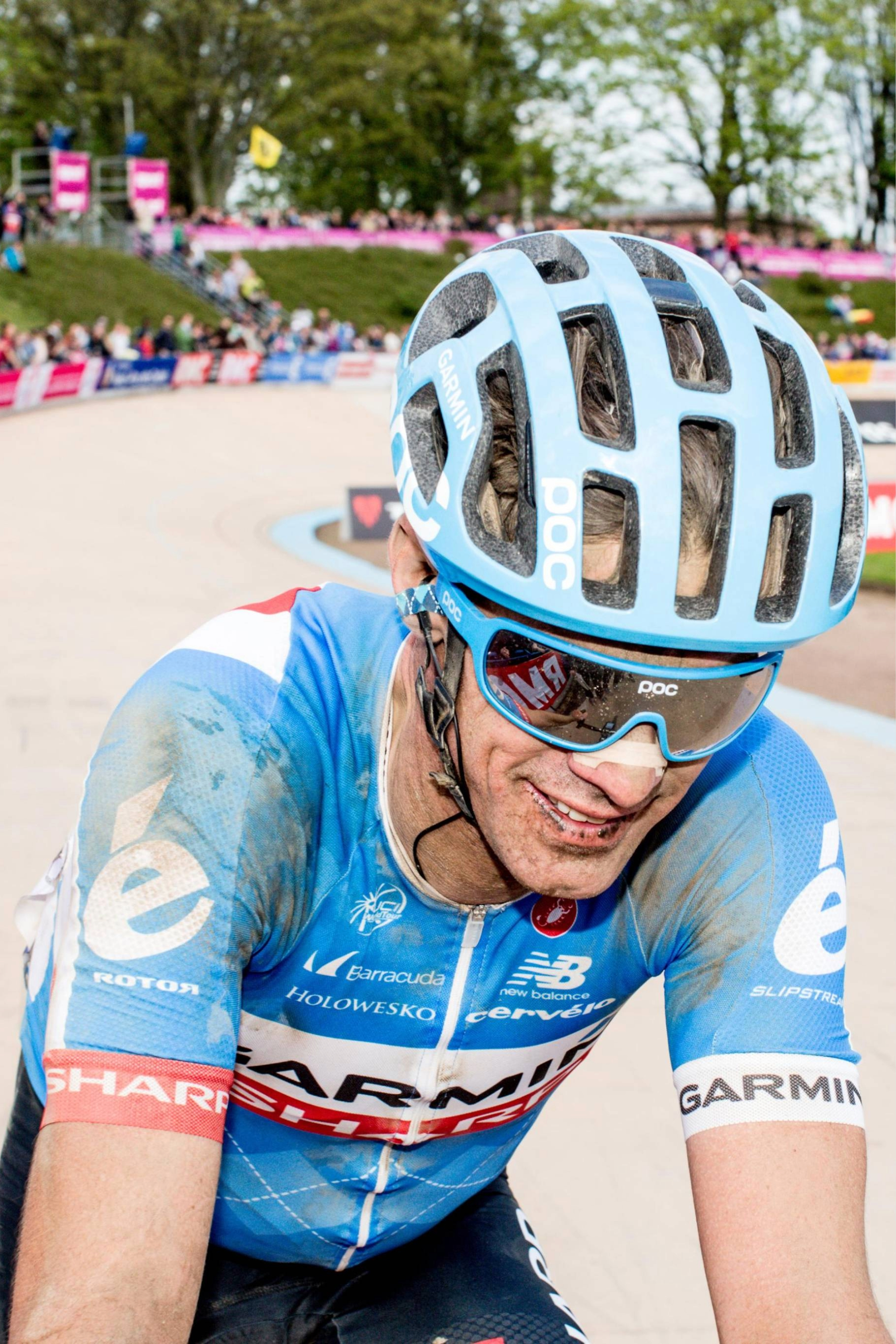
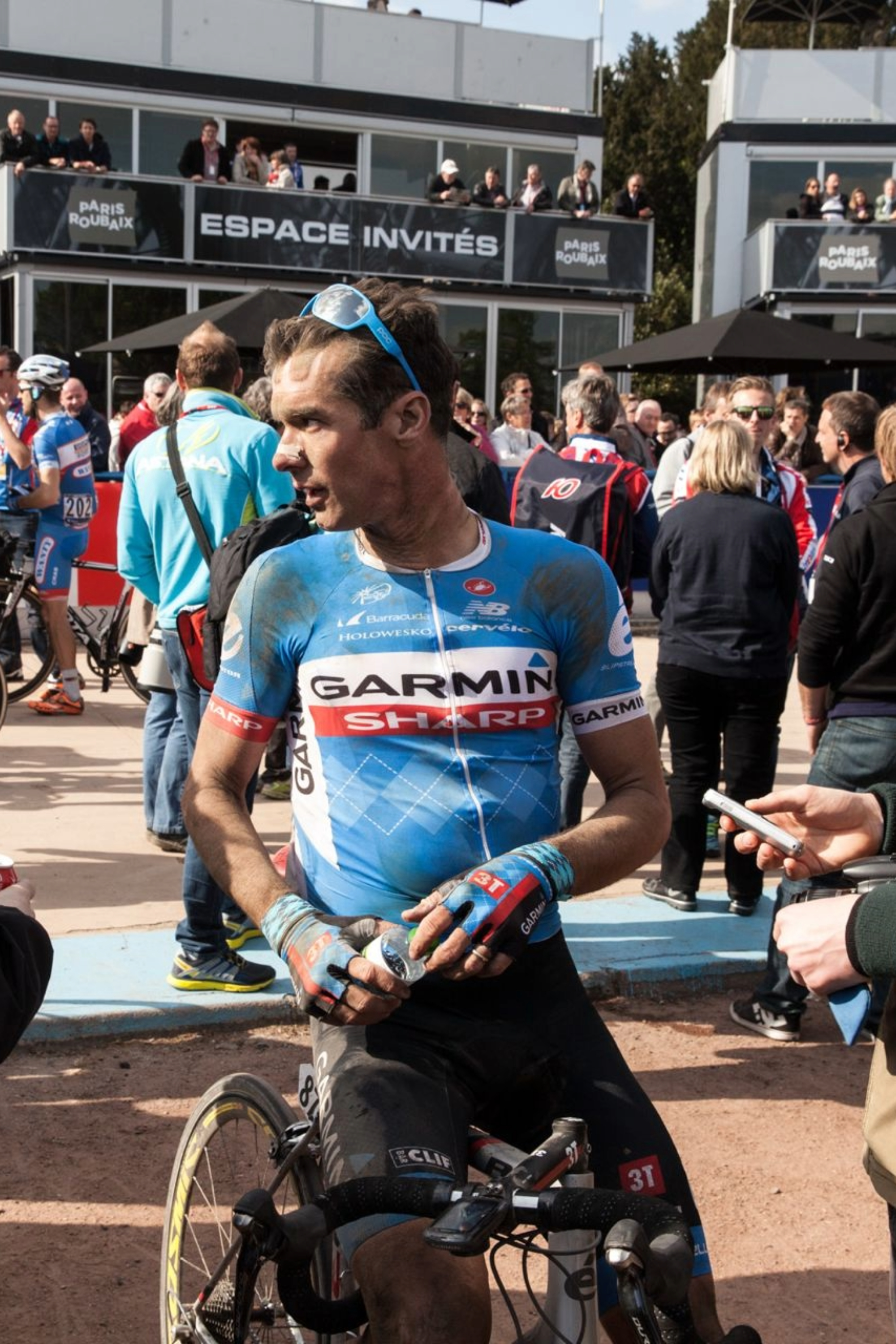
Having stayed away from the northern Classics until the end of my career, I only discovered a real love for them in 2010, by which point the ship had largely sailed. So in 2014, my final year as a professional, my biggest goal was simply to finish Paris-Roubaix. I could not end my career without making it to the velodrome. I did finish. And it’s perhaps prophetic that it was a Cervelo that I rode on my way to the Roubaix velodrome, a frame that Rob Gitelis’ factory produced. If we only knew then what we do now.
With that, I ticked the one box that had been sitting there, glaringly empty, since 2000. So it is fair to say I understand what this race represents.
Art for cycling’s sake
When I was 18, I made the decision not to go to art college. I wanted to race bikes instead. Over the years I have come to appreciate what a rare fork in the road that was. And although cycling culture has changed profoundly over the past 30 years, there is still a wide gap between those two worlds. This year, though, the stars aligned in a way I could never have imagined. Through our collaboration with VEXX, art and racing found themselves in the same place.
That was one reason I brought my 14-year-old son with me: to experience the strange alchemy I would have loved at his age. A few days before Roubaix, we visited VEXX at his studio in Brussels, an incredible space, exactly as I had hoped it would be. We sat down and talked about his journey and about the creation of the MONZA VEXX.
From Brussels we headed to the team hotel. VEXX came with us. The plan was simple: immerse him in the world of professional cycling and let him experience the wondrous chaos of Paris-Roubaix. In truth, his immersion had already begun the night before, when he watched A Sunday in Hell. I told him about my friendship with Jørgen Leth, and how he was another artist who had found something profound in professional cycling, and in Paris-Roubaix in particular.
It is always strange for me to be back in a team hotel. It feels like stepping into a time capsule from a bygone era, or, as the French would say, "plus ça change". Directors sit around tables making plans, soigneurs shuttle back and forth through reception, mechanics build and clean bikes in the car park, and riders slouch around as if every movement is an unwanted chore. In many ways it is the opposite of the creative energy of an artist’s studio, and that contrast is what makes it so interesting: the calm before the storm.
Shit gettin’ real
VEXX got to meet the riders from both Modern Adventure and Human Powered Health, and you could sense the reality of what his creation was about to do was beginning to hit him. The MONZA was the bike of choice throughout both teams, and the riders were full of praise for it. When we conceived the bike, we did not imagine it as being the ideal choice for Roubaix, but its essential purpose, a robust, everyday race bike, made it perfectly suited to the job.


At Paris-Roubaix, for most riders the first objective is simply to finish. They want to maximise their chances of getting to the velodrome. If we were talking about riders planning to attack for the win deep into the final, then perhaps the ONE would be the natural choice. But Roubaix has always been a pragmatic race for the vast majority. The bike is chosen to serve the mission, and the MONZA was exactly the tool for the job.
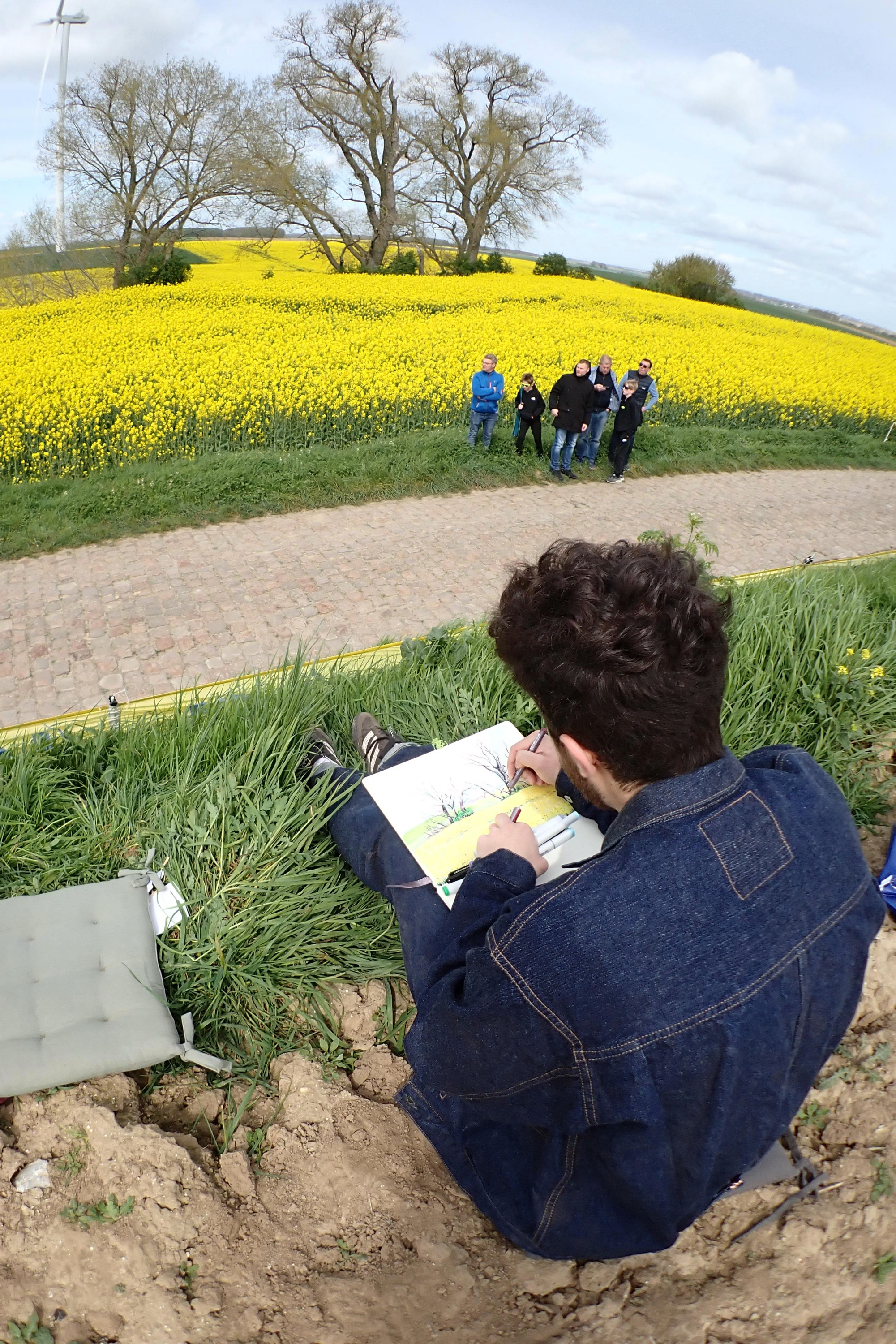
On race day we headed out to Sector 24, carefully chosen so that we could still make an easy exit and get back to the velodrome for the finish. We arrived hours early, stopping at a supermarket on the way to stock up on snacks. VEXX settled himself on a bank overlooking the cobbles, unpacked a sketchbook and some pens, and began drawing the landscape, perhaps the most civilised Paris-Roubaix spectator in history.
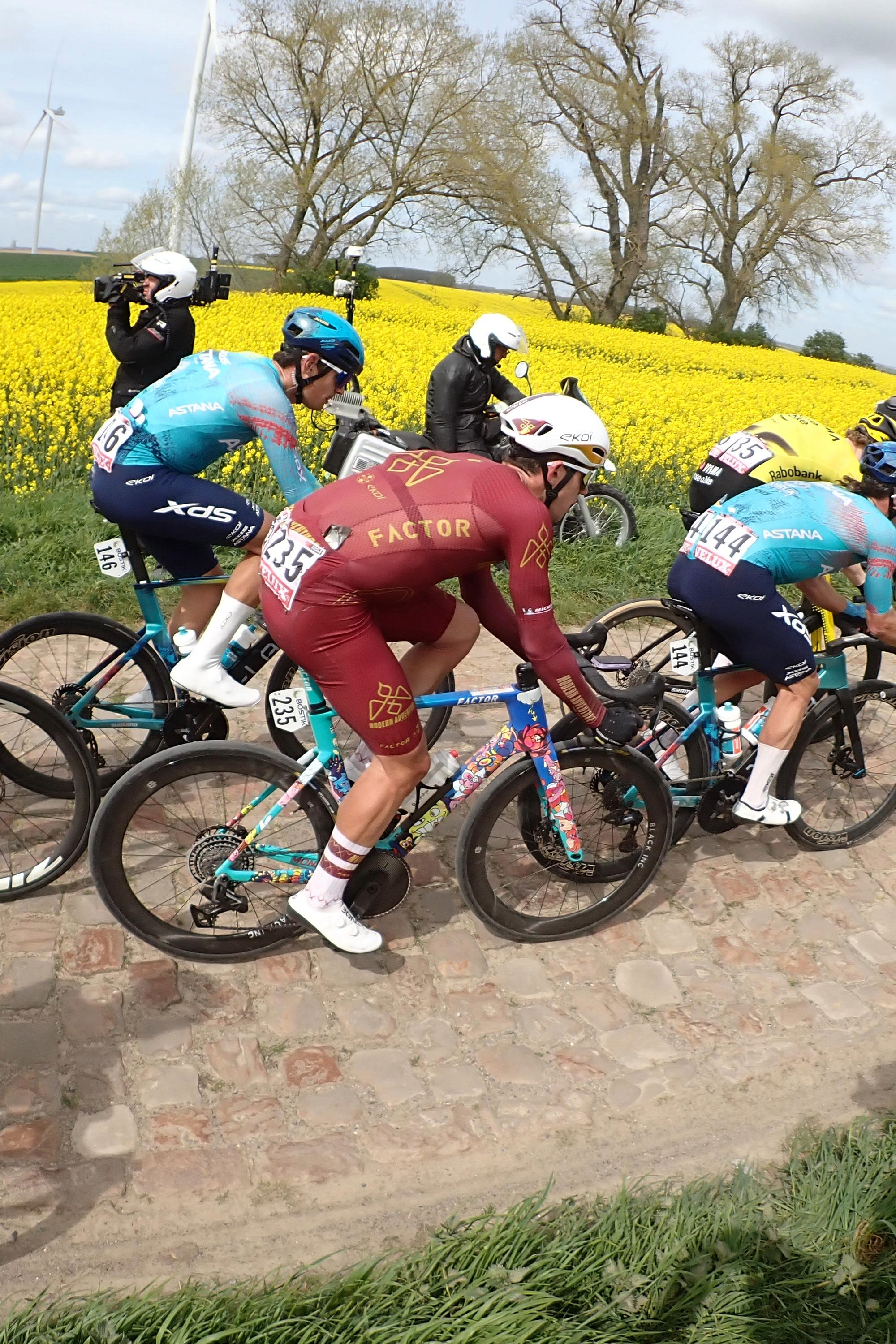
Then we waited. The race came and went in an instant: a cacophony of team cars, motorbikes, helicopters and bikes, an explosion of noise, colour and energy, the MONZA VEXX standing out in the blur. Modern Adventure came through present and correct.
We stood there for a few moments in the slightly embarrassed post-race confusion every fan knows: the sudden realisation that you are standing in a random field in the middle of nowhere, back in the real world. Everyone more or less ignores each other and trudges as nonchalantly quickly as possible back to their cars, eyes fixed on the race on their phones, occasionally tripping over in the process.
At the centre of it all
An hour and a half later, after being glued to the race on our screens in the car, we arrived at the velodrome. Tadej Pogačar and Wout van Aert were already alone out front, battling their way towards us. The energy inside the velodrome was electric, building to a kind of madness as the helicopter approached. Then suddenly they are there, and just as suddenly it is over.
Or at least that is how it feels at first.
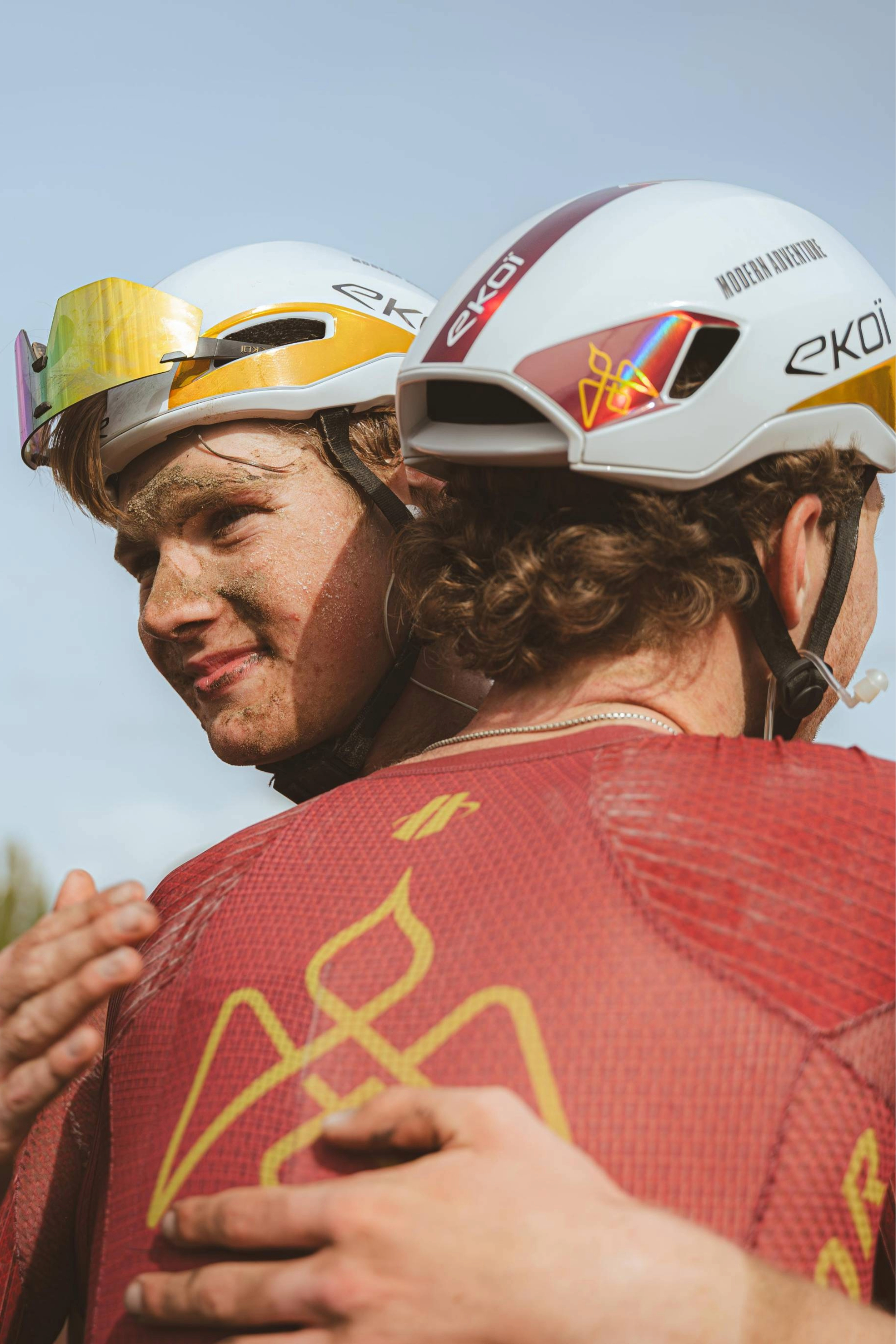
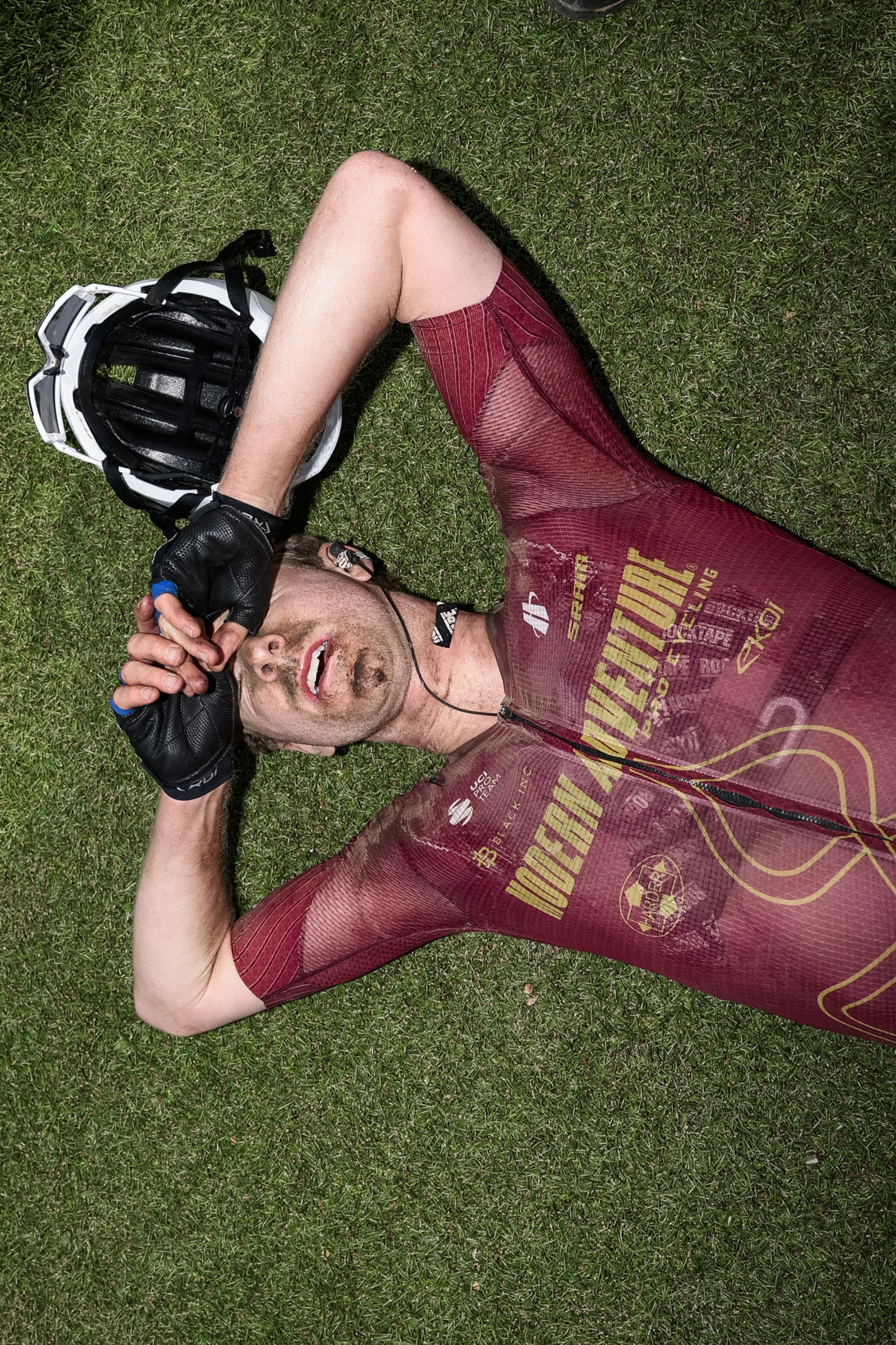
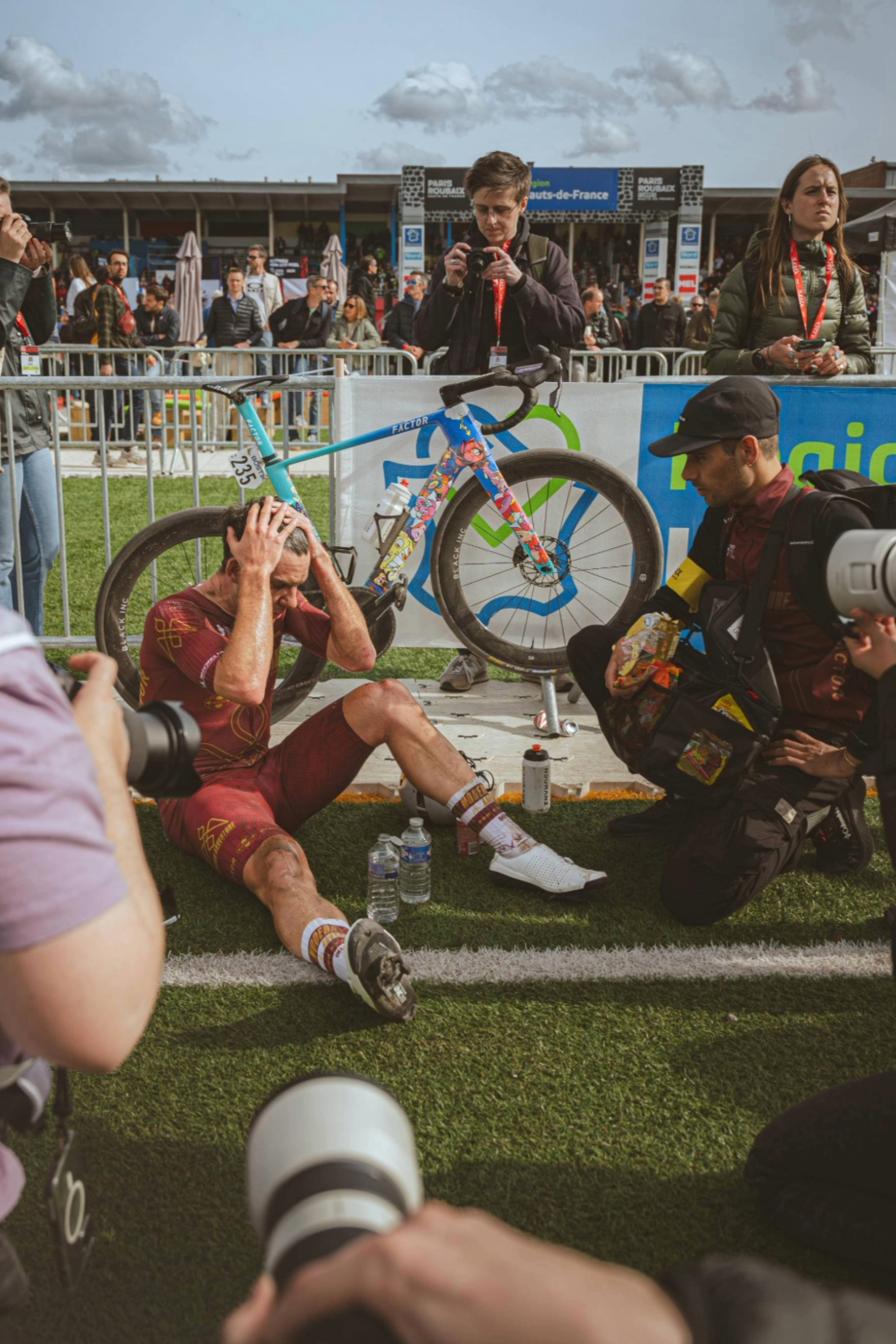
Because although the cameras focus on the delirium of the winner, there is a continuous stream of riders arriving behind, each one living through one of the most memorable moments of their life. VEXX, my son, and I made our way to the barrier where the Modern Adventure riders gathered as they came in one by one, collapsing to the ground, looking every inch what they now were: Roubaix finishers.
It was extraordinary to witness up close. They were all first-timers. Paris-Roubaix had not even been part of the plan in this first year; the wildcard invitation had arrived out of the blue in February. Yet here they were, doing something many of them had only ever dreamt about.

The most moving moment came when Cole Kessler rolled in, stepped off his bike and spotted his dad. He walked over, visibly spent, and they embraced across the barrier. And it just went on, and on, and on. It was impossible not to feel part of it. So much was being said without a word between them. It was the clearest possible reminder that sometimes finishing is a victory in itself. It’s times like these that bike racing is closest to art: pure, unspoken emotion that everyone might not understand, but certainly feels.

Follow us for the latest updates from all our athletes.


© 2026 Factor Bikes. All rights reserved / Privacy Policy |Terms